
It just sort of happens, you know? One evening you look over and your father’s knuckles are white on the armrest, trying to get up. Or your mother, who’d walk to the corner shop every single morning, now won’t leave her chair because she’s scared her legs will give way. The hospital discharge papers are somewhere under a pile of bills, and you’re hunched over your phone, 11pm, typing in a nursing care center near me and hoping something decent pops up. I’ve been on the other end of that search, families coming through our doors looking half exhausted, half hopeful. At Charring Cross Nursing Home we get it. So rather than give you a polished pitch, I’ll walk you through what physiotherapy for an older person actually feels like here – the unfiltered version.
Why things start slipping
Age isn’t kind to muscles. They shrink, joints dry up a bit, and that steady balance you never had to think about in your 40s just… goes wobbly. The CDC says one out of every four adults over 65 falls each year, and falls are still the number one injury cause for seniors. (Source: [CDC Older Adult Fall Facts](https://www.cdc.gov/falls/facts.html )) But reading a stat like that doesn’t tell you what happens after the fall – the fear that settles in. The way a person starts avoiding the stairs entirely, or stops going to the market alone, even if it’s just down the lane.
Physical therapy won’t make someone 40 again, obviously. But what I’ve seen, over and over, is it can bring back strength a person thought was gone for good. Mrs. Banerjee, who used to stay in Ballygunge before shifting here, came to us after a nasty hip fracture. For the first few days she wouldn’t even try to stand unless two people were holding her up. A few weeks of daily work, and she walked to the dining hall with a walker, no help. The first time she did it, one of the nurses clapped and then got all embarrassed. That’s the kind of thing that keeps us going.
The first sit-down is really just a chat
When your loved one arrives, we don’t do what you might expect. No one shoves a form at them and starts prodding. The first meeting is slow, a bit rambling maybe. Our physiotherapist will sit across from them – a cup of tea if they want one, the milky sweet kind that’s familiar – and just ask, what’s been difficult lately? What do they miss doing? Sometimes the answer surprises everyone. One man, Mr. Das, said he missed standing at the basin long enough to shave himself. His daughter’s eyes went wide, she’d never thought to ask. That tiny wish became our starting point.
The clinical checks get folded in gently. Range of motion here, a quick balance test there, watching them walk a few steps – but it’s all mixed into the conversation so it doesn’t feel like an exam. We don’t rush this part. If you are out there, searching for a reliable nursing care center near me, experience how the staff greets you first with asking for your problem in a straightforward and robotic way. If you feel it is not a good thing, they are just filling up forms, you may be right.
A plan that’s built around their little world
After that talk, we sketch out a therapy plan that’s completely theirs. Not a photocopied sheet from last month. Some folks need leg work, the quads have wasted a bit. Others are wobbly and need balance drills. Most are a mix. And there’s always a personal thread – like getting back to the mandir corner or carrying a plate without spilling.
So a typical week might look like:
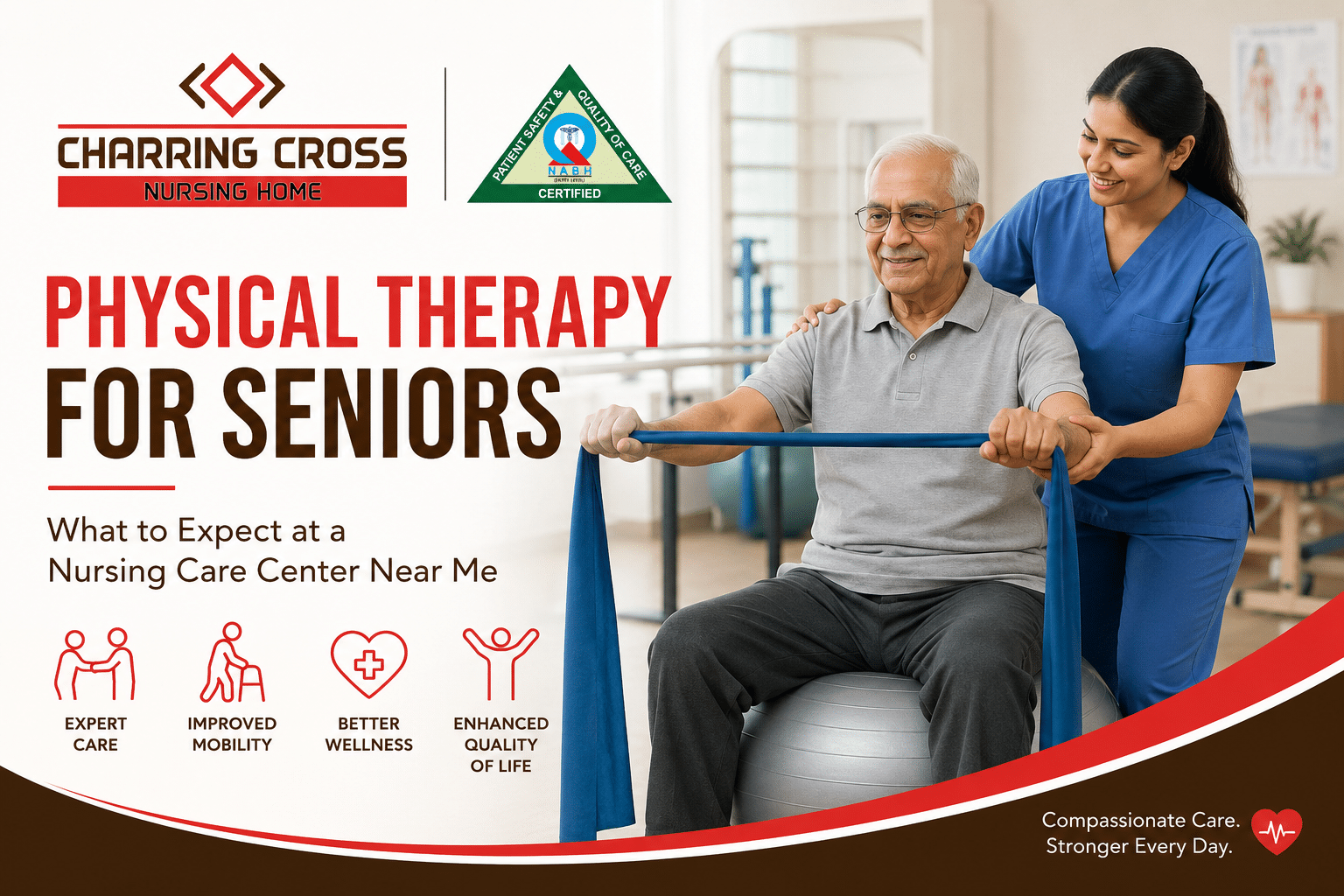
– Sitting and standing from a sturdy chair, progressing to no hands, maybe a resistance band if they’re stronger
– Walking practice, first inside the room, then the corridor, eventually out near the little garden if the Kolkata heat isn’t punishing
– Balance stuff – standing on one leg a few seconds while holding a bar, reaching for a book without tipping sideways
– The therapist working on stiff joints with their hands, just moving things gently to get the oil back in the hinges
– Pain tips that don’t always involve another tablet – a warm pack in the morning, sleeping with a pillow between the knees
But here’s the quiet magic of a nursing home: the ward sisters and aides know the plan too. They’ll coax the resident to walk to meals instead of taking the wheelchair, or remind them to do a few ankle pumps during the afternoon serial. These small nudges stack up in ways that a single daily session never could.
What a session actually feels like
Ditch the gym class picture. Our therapy corner is more like a quiet room with a few bars and a mat, maybe some old Rafi songs playing low if the resident prefers. A session often kicks off with a short amble, the therapist chatting about what the kitchen is cooking, nothing heavy. Then we move to the real work – sit-to-stand repeats, stepping over a rolled-up towel, walking while holding a glass of water. Because honestly, that’s the kind of thing that trips people at home, a wet floor or a doorframe. The therapist stays an arm’s length away, ready to steady them.
We wind down with a check-in. How did that feel? Sore in a new place? Some days the energy’s just not there, and we’d rather do a focused ten minutes than drag out a miserable half hour. Pushing doesn’t help, we learned that years ago.
So how long until there’s a change?
That’s the first thing families ask, every single time. And I can’t give you a clean number. I’ve watched someone go from barely sitting up to walking with a walker in about three weeks. Others, coming back from a stroke or a big surgery, stay with us for a couple of months, inching forward. What matters is we don’t set a plan in stone and forget it. Every two weeks or so, the therapist asks, are we still aiming for what this person actually cares about? Maybe a new goal surfaces – managing the step into the shower, or turning around in a tight kitchen. We shift accordingly.
The advantage of a place like this is there’s no waiting for the next appointment across town. If something needs adjusting, we do it then and there.
Family matters, more than you’d guess
Therapy sinks deeper when the family’s around. We practically pull relatives into sessions, gently. The resident’s face changes when a daughter or son walks in, they try that little bit harder. But besides emotional support, we teach practical stuff. How to help someone from bed to chair without wrecking your own back. How to use a gait belt properly. What to spot when they’re walking – is one foot dragging a little? We’ll talk through the house setup too, if they’re going back home. Move the favourite armchair nearer to the bathroom, add a grab bar, clear that loose rug. These aren’t big construction projects, just little tweaks that stop a lot of falls.
I’ve lost count of how many times a family member has said, “I had no idea it was that simple.” It really often is.
Why not just a regular clinic?
Outpatient therapy works for some, yes. But for an older person who’s fragile, or managing two or three conditions at once, a nursing care centre gives a safety net that a clinic can’t. Here, the therapist isn’t a person you see for an hour and then go home to an empty flat. They’re in the building. They’ll glance over during lunch, have a word with the nurse if someone looks off. If a resident gets dizzy after a session, help is right there, not a bumpy auto ride away. And there’s a quiet community feel – neighbours in the therapy space will call out “well done, aunty!” and mean it. You don’t get that in a clinic waiting room.
Frequently Asked Questions
Does insurance or Medicare pay for the therapy?
Usually yes, if it’s medically needed and the plan allows. Our admissions person sits with the family before anything starts and breaks it all down, plain language, so you’re not surprised later.
Do we need a doctor’s note?*
Yes, a physician’s order is standard for skilled nursing therapy. We handle the back-and-forth with the doctor’s chamber, families shouldn’t have to run around.
What if my parents tire out fast or have memory problems?
We adapt, simple as that. Sessions for someone with dementia might be shorter, calmer, focused on safe walking rather than pushing hard. If energy is low, we break things into tiny bits. The therapist works with whatever’s there that day.
Does therapy help with arthritis pain?
It often does. Gentle movement around the sore joint, a bit of manual loosening, a warm pack – many residents end up reaching for fewer painkillers after a few weeks. Not zero, but less.
The moments that stay with us
I keep coming back to Mr. Ghosh. He arrived after a bad chest infection left him in bed for weeks, legs like jelly. Therapy started with him lying flat – just ankle pumps, knee slides, barely moving. Then sitting on the edge of the bed, then standing with help, then a couple of steps. One afternoon he shuffled to the window, leaned on the sill, and pointed out a myna bird to his daughter who was visiting. She started crying, and our therapist had to look away. You can’t put that in a brochure.
Our team has been doing geriatric rehab for a long while now. The head of the department reviews every single plan personally, not because the rules say so but because she genuinely cares. And we always, always leave the door open for families – come watch, ask anything, have a cup of cha with the therapist if you like.
Choosing a place that feels human
If you’re still visiting facilities, sitting with a list of questions in your lap, searching a nursing care center near me, don’t only check the machines. Watch the staff. Do they lean down to talk, or loom over? Do they call residents by name, or just bed number? Those tiny human details matter more than anything else. At Charring Cross Nursing Home, we try to get those details right, even on chaotic days when the rain’s coming in and the generator’s acting up.
You’re always welcome to drop by, no appointment needed, just walk around and see for yourself. Have a look at our therapy space, chat with whoever’s around. There’s zero pressure, and definitely no polished sales talk. Just a real conversation about your family member and what might help them feel a bit more like themselves again. For any questions or to plan a visit, ring us or pop over to [https://charringcross.com/](https://charringcross.com/ ).
Author: The Clinical Team, Charring Cross Nursing Home
Author Bio: Our clinical team brings together decades of combined experience in post-surgical care, rehabilitative nursing, and resident wellbeing. At Charring Cross, we work as one unit: nurses, physiotherapists, and care staff to make sure every recovery plan is built around the person living it, not just the procedure they had.