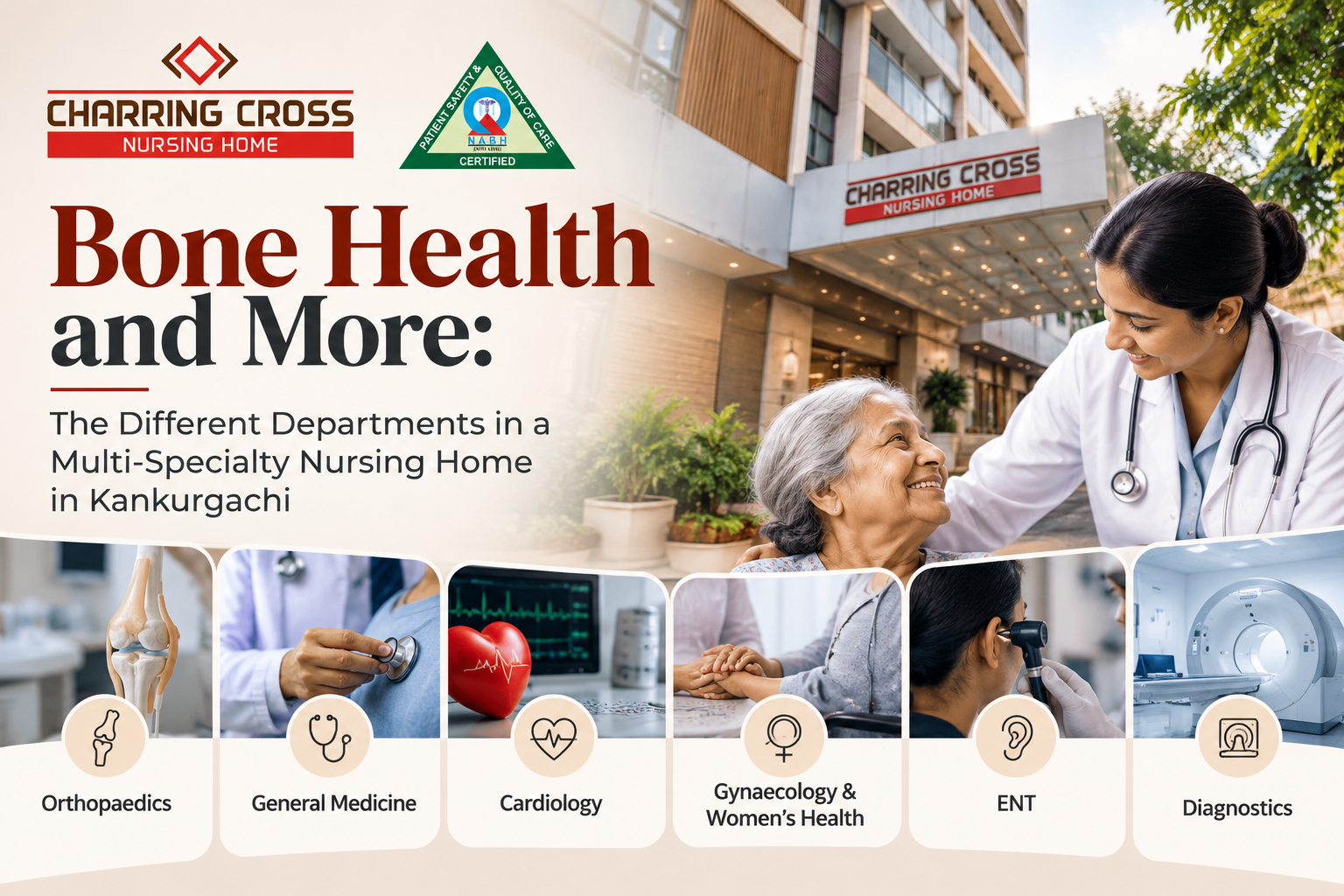

The fan in my consulting room ticks when rain is coming. Tick-tick. You notice these things after twenty-something years in the same chair. I was half-listening to it this morning, cup of tea gone cold, looking at a new admission chart. Eighty-two years old. Fractured hip. Diabetes for two decades, blood pressure for one. And a sadness that hung around her like a worn-out shawl—nobody had named it, nobody had asked. Her sons flew in from abroad, settled her as best they could, and flew back out with guilt packed into their suitcases. The chart was a mess of specialist notes stapled together, doctors who had never been in the same room let alone had a proper conversation about her. I rubbed my eyes and thought, again, *this is why we do it this way, here, at our multi‑specialty nursing home in Kankurgachi.
I’m not going to talk about healthcare models. I’m too old to sell you jargon. What I can do is tell you what happens when a real person, someone’s mother or grandmother, comes through our doors. I’ll tell you about Mrs. Chatterjee, not her real name and her sweet tooth, and a bowl of Kheer that almost didn’t happen.
So Mrs. Chatterjee arrived after two hospital stays that hadn’t fixed much, and a home recovery that fell apart quietly. Blood sugar crashes in the middle of the night. A fall on the way to the bathroom because the hired night attendant was asleep. And she stopped eating. Not because the food was bad. Because nobody had asked her what she actually wanted to eat. She was from a North Calcutta para, a Brahmin widow who grew up on Bengali food, and the diet sheet that came with her was some printed “diabetic continental” menu that meant nothing to her. Might as well have been written in Greek.
Our dietitian sat on the edge of the bed on day two and just talked. About food, about cravings, about what home tasted like. Mrs. Chatterjee said, almost whispering, that she missed *nolen gurer payesh*. The real thing, the winter jaggery kind that smells like bonfires and childhood. Now, you can’t just give a brittle diabetic a bowl of that. But saying no outright—that’s not how we work. The dietitian and the cook tried a version with millets and a date paste that had the same dark caramel notes. First attempt: grainy, awful. Second: too bitter. On the third try, they brought a small bowl to her. She finished the whole thing and then asked, voice soft, Will there be more?
That’s not a story about food. It’s about whether someone still believes there’s a tomorrow worth asking about. You don’t get that from a specialist who visits for fifteen minutes and never learns her name. You get that at a multi‑specialty nursing home in Kankurgachi where the team actually talks to each other, and more importantly, to the person lying in the bed.
A Morning That Could Have Gone Very Wrong
Let me shift to a different morning, last month. Mr. Das. Stroke recovery, three weeks in. Doing well enough to argue with the physiotherapist, which we take as a very good sign. That Tuesday, the nursing aide who helps with morning wash noticed his right grip was weaker than yesterday, and there was a little drool on the pillow. That’s it. Two tiny things. Could’ve been dismissed. The aide could have just wiped the pillow and moved on. But here, she noted it. The nurse on duty checked his vitals and called the physio. The physio tested his grip strength, saw the drop, and called the neurologist. Within forty minutes he was getting clot-dissolving medication for a minor repeat stroke. A week later he was back to bickering with the physio.
In a disjointed setup, that drool is laundry. Nobody connects it to a brain event. By the time something bigger happens, it’s a catastrophe. I’ve seen it too many times, before we built this place as a single, tight unit where the aide’s observation matters just as much as the doctor’s order. The World Health Organization has a whole framework on “integrated people-centred health services” (you can look at it [here](https://www.who.int/health-topics/integrated-people-centered-health-services#tab=tab_1 ), full of evidence. But evidence is numbers. I’m talking about Mr. Das living to tease the physio another day, and Mrs. Chatterjee eating her Kheer.
What Families Actually Worry About
Families come to us with questions that are much simpler than “integrated care.” They ask: “Will my mother be alone at night?” “What if my father falls and nobody notices?” “Does the staff speak Bangla properly, or will he feel like a stranger?” These are the real fears. The night shift here is never a single person dozing. We walk the corridors every hour. Falls are treated like medical events—root cause, analysis, change in plan. And the staff? They remember that Room 12 takes two biscuits with tea on a good day, none on a diabetic day. They know.
We give every family one name, one phone number: a care coordinator. A real person who sits near the garden and spends her day knowing what’s happening with each resident. When a son calls from a different time zone, he doesn’t get transferred around. He gets the truth, including the hard parts.
The Four O’Clock Gathering
Around four in the afternoon, the tea trolley rattles out. Those who can walk or be wheeled gather. Sometimes the physio assistant puts on old Hemant Kumar songs from a tiny speaker. I’ve watched residents who barely spoke all day start humming. A retired professor who hadn’t shaved in a month, so deep in his depression, asked to borrow a razor from the nurse because he suddenly felt like “looking decent.” None of this is in a textbook. But it’s as much care as the IV line. Loneliness eats away at people faster than most diseases, we’ve just learned it by watching.
A Confession and a Lesson
I should admit something. Twenty-five years ago, I was a younger doctor who thought good care was nailing the diagnosis and writing the right prescription. I’d stride through wards, correct charts, think my job was done. Then my own father went through a cardiac bypass and his aftercare was a mess of disconnected specialists. That’s when I understood—the spaces between The doctors are where people get lost. So when we started this multi‑specialty nursing home in Kankurgachi, we insisted that specialists work here full-time or on set schedules. No rotating cast of consultants who vanish. The cardiologist and the orthopaedic surgeon talk at lunch, not via email threads that take three days. The physio’s notes are read by the physician before evening rounds. It’s old-fashioned communication with modern structure. It works.
FAQs
Can a middle-class family afford this?
Look, the monthly cost might seem higher than a basic elder home where you pay per visit. But families tell us they spend less overall because we stop the spiral of hospital readmissions, repeat tests, ambulance dashes. Also, the son or daughter who was missing work to coordinate care gets their life back. That’s real savings.
What if my father wants his own doctor to stay involved?
We never say no. We share everything, including the outside doctor’s advice into the daily plan. No ego about it.
Does it feel like a hospital or a home?
Somewhere in between, intentionally. Grab bars, yes. Medical equipment, yes. But also plants, photographs, a small puja room a family donated, a kitchen that sometimes smells of *phoron* because we let families bring home-cooked food if it fits the plan. It feels lived in. It is.
Why Kankurgachi?
If you’ve ever tried to cross this city in evening traffic just to visit someone in a far-flung facility, you understand. Kankurgachi sits central—close to Ultadanga, Manicktala, Phoolbagan, a quick drive from Salt Lake and Park Street. People drop in after work, share a cup of tea, and leave. That daily presence, that ease, matters for the residents’ hearts. It’s not a place you pack your parents off to and visit once a month.
An Invitation, Not a Sales Pitch
If you’re reading this and your stomach is tight with worry about a parent getting frailer or a spouse who isn’t bouncing back the way the hospital promised, you don’t have to decide anything now. Come by. Bring the person if they can travel, or come alone and look. Sit in the garden. Watch how the staff speak to the old folks. Ask me hard questions. I’ll give straight answers, even if the answer is that we aren’t the right fit because sometimes we aren’t, and I’ll say so.
Twenty years have taught me that you can’t promise miracles. But you can promise that no one becomes an afterthought, no ache gets brushed aside, and no family ever feels like a nuisance for calling. That promise, we keep.
Author: The Clinical Team, Charring Cross Nursing Home
Author Bio: Our clinical team brings together decades of combined experience in post-surgical care, rehabilitative nursing, and resident wellbeing. At Charring Cross, we work as one unit: nurses, physiotherapists, and care staff to make sure every recovery plan is built around the person living it, not just the procedure they had.
Date Published: